




Bookkeeping basics for small businesses
In order to run a small to medium-sized business, you have to learn some bookkeeping basics. Don't panic, though. You don't need to commit to an accounting degree to master the techniques you'll need.
Bookkeeping is a process that involves recording and organizing your business's financial transactions. Learning bookkeeping basics — and applying them — can revolutionize your business.
Types of bookkeeping accounts for small businesses
Here are 1o types of bookkeeping accounts for a small-to-medium sized business.
1. Accounts receivable
Receivable is the money owed to you by the customer. This happens when you sell products and services, but don't collect money straight away. In order to stay up to date on who owes you what, you'll need to track accounts receivable. This helps you invoice customers on time.
2. Accounts payable
This account deals with the money that your business owes to vendors, contractors, and other parties. An accounts payable account gives you a clear and simplified view of when your payments are due and helps you avoid duplicate payments.
{upsell_block}
3. Cash account
As the name suggests, all the financial transactions of your business go through a cash account. You can further maintain two separate bookkeeping records for cash that are
- Cash receipts
- Cash disbursements
4. Inventory account
Any record of unsold products goes into your inventory account. Think of this as money saved in the form of assets or products; hence you must keep a careful record to track them. It will help you physically run a periodic stock check to confirm that the inventory products match the record on the books.
5. Loans payable account
Has your business borrowed money to purchase assets like property, furniture, vehicles, and equipment? Then a loan payable account will track payment details and monthly due dates for your business loans.
6. Owners equity account
This account tracks the amount you into your business as its owner, minus any liabilities. (Liabilities are essentially claims in which you owe lenders and other vendors.) This is also known as "net assets."
7. Payroll expenses account
Bookkeeping can help maintain your payroll expenses in an organized fashion. This will allow you to stay up to date on your taxation compliance, ensuring you never miss a due date.
8. Purchasing account
This account tracks the purchase of any raw materials and finished products for the business. This account is a crucial component when it comes to calculating the cost of goods sold (COGS) — indispensable if you run an online or brick-and-mortar store. You just subtract the amount you paid to buy the raw material from the sales, and the remainder is your profit.
{write_off_block}
9. Retained earnings account
This account tracks all your company's profits and investments that haven't yet been paid back to the business owner. Retained earnings are the amount of money that appears as the running total of money retained since your business started.
10. Sales account
As the name suggests, this account tracks all the revenue your business makes from sales. Recording and maintaining an accurate sales account will help you understand where your business is currently standing.
All these accounts may sound too much to handle in the beginning. However, once you get the hang of the bookkeeping basics, you'll be able to effectively use the data from these accounts to make informed business decisions.
7 must-know bookkeeping skills for small businesses
Whether you're an established or new business owner, here are seven bookkeeping processes to follow.
1. Setting up all business accounts
You can still go old-school and do this on physical books, but most businesses use computer booking software to record their accounts. This results in a virtual record also known as your "general ledger."
You can use the following software solutions to set up all your business accounts.
- Desktop bookkeeping software
- Cloud-based bookkeeping software
- Spreadsheet software like MS Excel
You can even pay a bookkeeper, accountant, or third-party company to manage bookkeeping accounts on your behalf.
2. Adopting a bookkeeping method
About to set up your in-house bookkeeping system? You'll need to decide whether to use a single-entry or double-entry bookkeeping system.
What's the different?
- Single-entry bookkeeping: In this system, you enter each financial transaction once only across all your accounts. This method is ideal if you have a simple business, without any inventory or large equipment. Freelance writing would be a good example.
- Double-entry bookkeeping: This is the more comprehensive method. It may require you to enter a single transaction into several accounts. For example, selling a product will deduct the transaction from the inventory section, but also make you enter the incoming payment into accounts receivable and assets accounts. This method is ideal for someone whose business involves holding inventory.
{email_capture}
3. Recording financial transactions
By this stage, you'll have set up all your financial accounts and chosen a bookkeeping method. You're all set to start recording your transactions.
You'll have to determine which accounts will record debit and credit. For example, you bought new software for $1,000 in cash. This transaction will affect two bookkeeping accounts:
- Cash account: Debit from cash. because your cash value decrease following the payment
- Asset account: Debit, because you now have new equipment
Know that you must record each and every debit and credit financial transaction, no matter how small it might be.
Why? Bookkeeping is all about the process of recording and showing a balance between your incoming and outgoing money. Missing out on any payments — even if they're ten cents — will cause issues when you try to reconcile your books.
4. Reconciling your accounts
Balancing your accounts is the most crucial sep of bookkeeping basics. In this process, you tally up all accounts to ensure that no money or assets are missing. This means that the total amount must match — the outgoing amount must equal the incoming assets or profits.
When this happens, you say the books are balanced.
Typically, business do this on a quarterly or even monthly basis.
If you've been recording entries to each account as credit or debits, you'll send these entries to each account in the general ledger and adjust your account balances accordingly.
For example, say that last quarter, your cash account had $10,000 in credit and $5,000 in debit. You'll adjust the balance in your cash account with a difference of $5,000. Once you've balanced the books, your equity — what you hold — should match the liabilities, what you owe
If they don't match, you'll have to go through your bookkeeping record to find the error or missing entries.
5. Preparing your financial reports
Now that you have reconciled all your accounts and transactions, you're ready to close out the month and print out your financial reports.
Financial reporting is a critical part of any business's bookkeeping process. These reports provide you with a transparent and accurate view of your business' current standing. You also get to gauge the financial health of your company and share it with any stakeholders you might have, plus your accountant.
Your financial reports have three main parts:
- Balance sheet: Shows your company's equity, assets, and liabilities at the end of the closing date
- Income statement: Shows your business's new income over a certain time period
- Cash-flow statement: Shows all incoming and outgoing transactions over a certain period of time
Bookkeeping software can go through this process for you, saving you time.
6. Developing consistency
Bookkeeping is not something you can pick and do when it suits you. One of the most important bookkeeping basics is to stay consistent and stick to the schedule you've established for your business. You must record all financial transactions — ideally once a week. These include all incoming invoices, outgoing bill payments, purchases, and sales.
Make it a priority to regularly balance your books. You can either do it every month or at the end of every quarter. If you're afraid you might procrastinate, or get caught up in other aspects of running your business, it can help to have a dedicated person do this for you.
7. Storing your records
You must always ensure secure storage of your bookkeeping records. Following the bookkeeping basics above will make the process easier and help you to stay compliant with industry standards.
Securely stored and well-maintained bookkeeping records will help you track previous invoices without burying yourself in an unorganized mess. Getting a handle on your bookkeeping can also prevent your sensitive financial data from falling into the wrong hands.
If you're struggling with getting started with your bookkeeping, don't keep struggle on your own. Although you don't have to be an accountant to master bookkeeping basics, it can still be challenging — especially for a more complex business.
Consider seeking assistance. You can hire a full-charge bookkeeper, a virtual bookkeeper, or use software to keep financial records. For a simple business, you can do this on the go through an app like Keeper. These apps allow you to record income transactions and scan your credit card or bank statements for outgoing expenses.
That said, the above-mentioned bookkeeping basics will be enough to get you started, helping you record your business's transactions with peace of mind.
Over 1M Americans trust Keeper for their complex taxes
Keeper is the #1 tax app for freelancers and businesses-of-one. Capture every deduction, credit, and tax-saving opportunity with expert review on every return.



Sign up for Tax University
Get the tax info they should have taught us in school
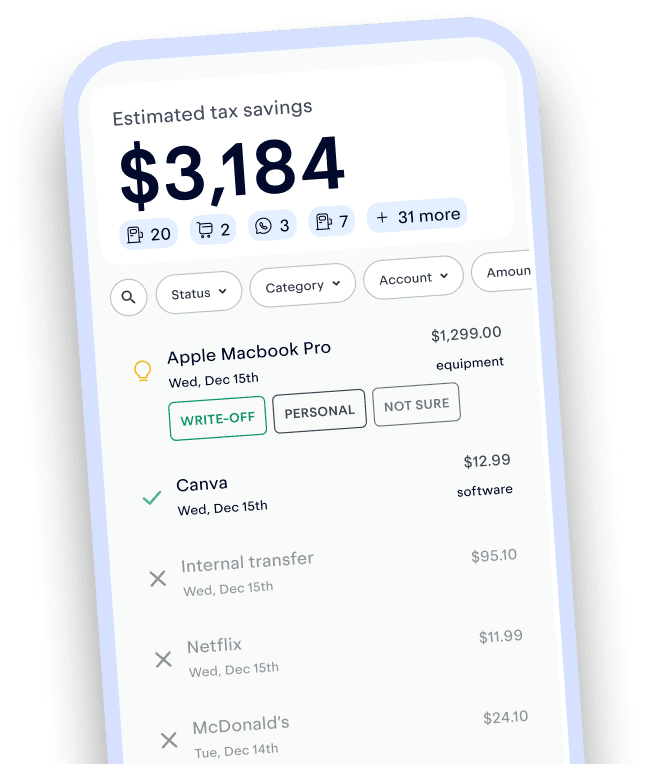
Track and claim every eligible deduction with Keeper
Keeper is the top-rated all-in-one business expense tracker, tax filing service, and personal accountant.



What tax write-offs can I claim?

What tax write-offs can I claim?
Discover effortless tax savings, with Keeper Tax

File complex taxes confidently



Recommended Videos
More Articles to Read


