





- The safe harbor rule says the IRS won't charge an underpayment penalty if you pay at least 100% of last year's tax through estimated payments (110% if your prior-year AGI was over $150,000).
- It works even if your current year ends way higher. You can owe a lot in April and still avoid the penalty.
- The ~8% IRS underpayment rate makes missing safe harbor more expensive than ever.
- You can also avoid the penalty by paying 90% of the current year's tax, but that requires forecasting income you don't yet have.
- Safe harbor does not protect you from the income tax itself. You still owe the full amount in April.
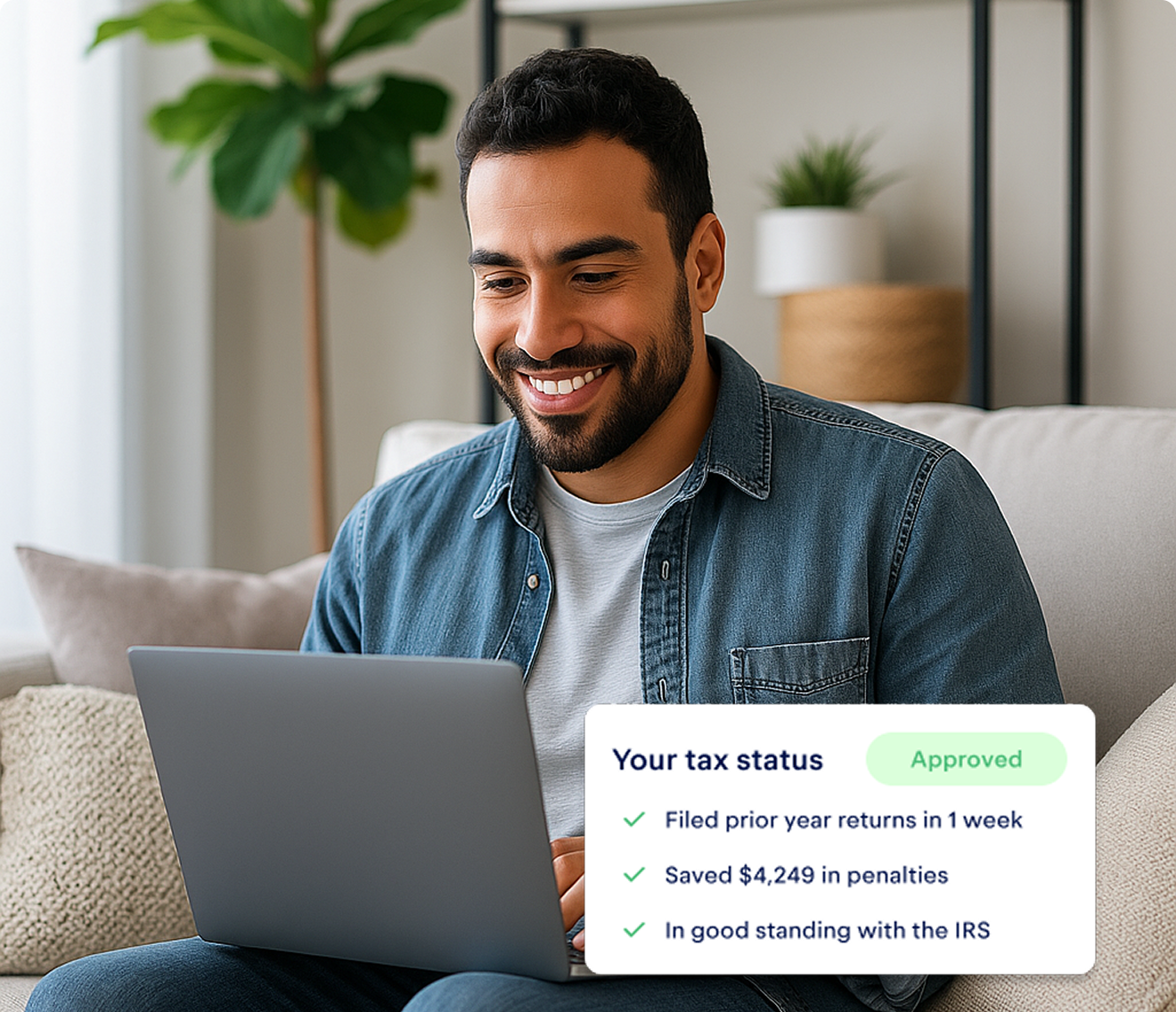

Estimated taxes are part of the deal when it comes to earning self-employment income. Yet we hear time and time again how much people struggle to understand whether they owe estimated taxes and how much to even pay. The worry is valid. The IRS hits you with an underpayment penalty if you fail to pay the right amount. Oof!
Here's the good news. The safe harbor rule shields you from underpayment penalties as long as you meet certain payment thresholds. It’s essentially the IRS recognizing that self-employed people are being asked to do, on their own, what entire payroll departments handle for W-2 employees. Traditional employees have taxes automatically calculated and withheld from every paycheck, but freelancers and business owners are expected to estimate, track, and make those payments themselves.
What's the safe harbor rule?
The safe harbor rule is the IRS's promise that they won't charge you an underpayment penalty as long as you pay enough through quarterly estimated taxes. "Enough" is defined two ways, and you only have to hit one of them.
Option 1: Pay 100% of last year's tax liability
The first option is the safer one for freelancers with unpredictable income. Pay 100% of last year's total tax liability, divided across four quarterly payments. If last year's tax was $12,000, you pay $3,000 each quarter. Easy peasy!
Option 2: Pay 110% of last year's tax liability if you're high income
The second option only applies if your adjusted gross income (AGI) was over $150,000 ($75,000 if you're married filing separately). In that case, the threshold jumps to 110% of last year's tax. So if you made $200K last year with an $18,000 tax bill, you'd need to pay $19,800 in estimated payments across the four quarters.
Option 3: Pay 90% of this year's tax liability
Most people avoid this option, because it requires you to be able to forecast your tax liability accurately for the year. If you have really predictable income, this method might work out for you.
How to calculate your safe harbor number
Pull up your most recent 1040. Line 24 (total tax) is the number that matters. Then, pay 100% or 110% of that number to meet your safe harbor target for the year.
Divide that number by four, and then make those estimated tax payments on April 15, June 15, September 15, and January 15. Use IRS Direct Pay or send a Form 1040-ES voucher.
Let's use Maya as an example. She's a freelance graphic designer and her tax return showed $9,200 in total taxes. Her AGI was $84,000. She needs to pay 100% of $9,200, which is $2,300 per quarter. Her income could double, triple, or quadruple, but as long as she pays $2,300 every quarter, the IRS can't hit her with an underpayment penalty.
Safe harbor number vs. actual taxes owed
While your safe harbor number ensures you don't owe underpayment penalties, it doesn't mean that's the total amount you actually owe.
Let's go back to Maya: she pays $2,300 per quarter all year based on last year's tax liability. Butlet's say this year her income jumps from $84,000 to $180,000. She still owes maybe $35,000 in taxes. The safe harbor rule means she doesn't get penalized for not pre-paying that whole amount, but she's still going to write a check for around $25,800 in April.
Need some help? Check out Keeper's quarterly tax calculator to estimate how much you should be paying in quarterly taxes. Plus, see how much you could owe in penalties if you underpay with our estimated tax penalty calculator.
The IRS underpayment interest rate is hovering ~6% as of Q2 2026. The Federal Reserve pegs the IRS rate to the federal short-term rate plus 3%. As long as we're in this elevated-rate environment, missing safe harbor is meaningfully more expensive than it was a few years ago.
When the safe harbor rule doesn't work for you
You might fall into 1 of 3 cases where the safe harbor rule may not make sense
If this year's income is trending far below last year's income. Paying 100% of last year's tax means you're overpaying in real time. You'll get the difference back as a refund, but you've effectively given the IRS an interest-free loan.
If you had a one-time event last year that won't repeat. Let's say you sold a business asset or hit a windfall. Your "prior year tax" is artificially high, and the safe harbor target overstates what you need to be paying.
If your income is highly back-loaded. Safe harbor requires equal quarterly payments. If you make most of your money in Q4 (wedding photographers, holiday-season Etsy sellers), the annualized income method on Form 2210 may let you pay less in the early quarters without penalty.
FAQs
What happens if I underpay even with safe harbor?
If you hit safe harbor, the IRS doesn't charge a penalty regardless of what you owe in April. However, yuou still owe the full tax in April!
Can I just pay the whole safe harbor amount in Q1?
The IRS expects equal quarterly payments. Front-loading can technically work if you also annualize on Form 2210, but the safer approach is to pay one-quarter of the safe harbor target on each due date.
Do I owe estimated taxes if I'm new to self-employment and have no prior-year tax?
The 100%-of-prior-year safe harbor only works if you actually had a prior year. New freelancers default to the 90%-of-current-year rule, which is harder because you have to forecast. Most new freelancers should aim for 25% to 30% of net 1099 income set aside until they have a year of history.
Over 1M Americans trust Keeper for their complex taxes
Keeper is the #1 tax app for freelancers and businesses-of-one. Capture every deduction, credit, and tax-saving opportunity with expert review on every return.



Sign up for Tax University
Get the tax info they should have taught us in school
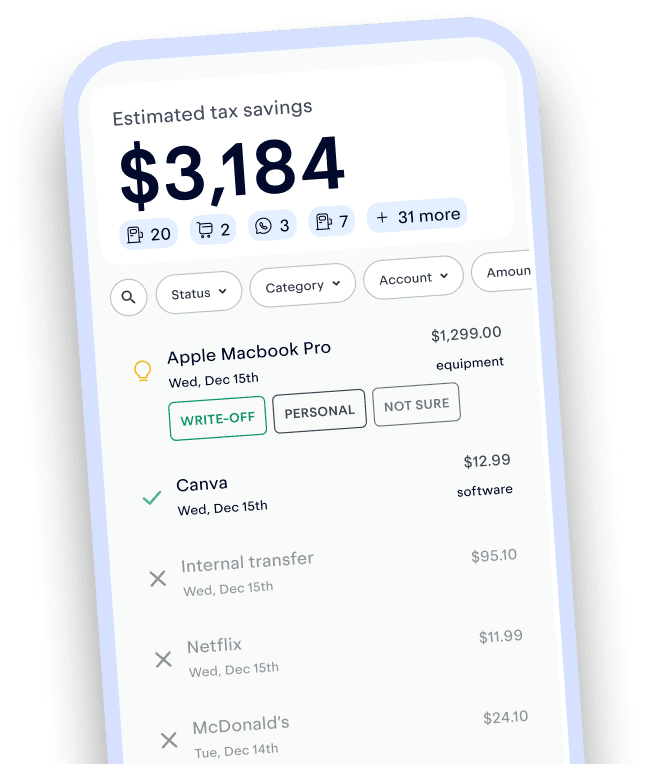
Track and claim every eligible deduction with Keeper
Keeper is the top-rated all-in-one business expense tracker, tax filing service, and personal accountant.



What tax write-offs can I claim?

What tax write-offs can I claim?
Discover effortless tax savings, with Keeper Tax
File complex taxes confidently



Recommended Videos
More Articles to Read


